العربية




إجابة سريعة
يتأثر الرخام والجرانيت بطرق مختلفة أثناء النقل، لذا يجب أن تختلف طريقة التعبئة والتغليف. معظم معلومات التعبئة والتغليف للتصدير في هذا القطاع تُكتب لتصنيف "الأحجار الطبيعية" كفئة واحدة، ومن هنا يبدأ الكثير من التلف.
الرخام صخر كربوني، وهو ألين من الجرانيت وأضعف عند الحواف. نادرًا ما نرى تلفًا في الرخام على شكل تشقق في المنتصف، بل على شكل تشققات في الحواف وكسر في الزوايا، وينتج ذلك عن حركة اللوح داخل غلافه. حزمة بها مسافة 10 مم من الحركة ستُحدث تشققات في الرخام دون أن تؤثر على الجرانيت.
الرخام المصقول أكثر عرضة للبقع. احتكاك سطحين مصقولين معًا لمدة أربعة أسابيع يُفقد الرخام لمعانه. كما أن السطح المصقول الملامس للمعدن المكشوف، أو للرطوبة المحتبسة، قد يمتص بقعًا لا يمكن إزالتها مهما تم تلميعه - أما على الرخام الأبيض أو الرمادي الفاتح، فإن هذه اللوحية تكون قد اكتملت.
ثلاثة أمور تحكم طريقة تغليف الرخام. يجب أن تكون الحزمة محكمة تمامًا دون أي حركة داخلية. يجب فصل كل سطح مصقول عن الآخر. ولا يلامس أي سطح مصقول الخشب أو المعدن أو الأرضية. وكل ما يلي ذلك يتبع هذه الأمور الثلاثة.
تغطي ثلاثة أنظمة تقريبًا جميع منتجاتنا الرخامية التي نشحنها. ويعتمد النظام الذي تحصل عليه على شكل المنتج، وليس على حجم الطلب. هذه هي التصاميم التي نستخدمها لـنوفر ألواح الرخام وقطع الرخام حسب المقاس.
| نوع التعبئة | يستخدم لـ | بناء | حد التحميل |
|---|---|---|---|
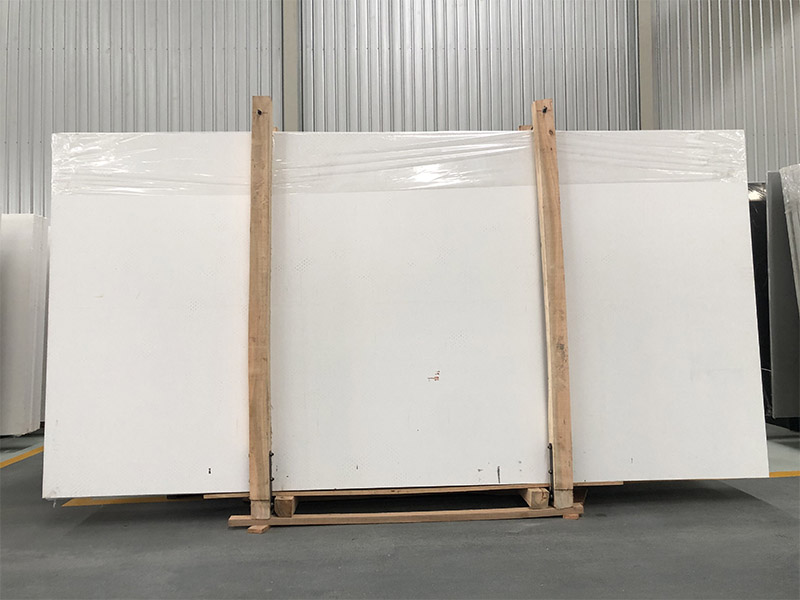
| حزمة خشبية مزدوجة على شكل حرف A | منشار متعدد الشفرات للألواح الكبيرة، 2 سم و 3 سم | خشب بأبعاد 50×50–70×70 مم، قاعدة 80×80 مم، خلوص للرافعة الشوكية ≥100 مم | ≤ 2.5 طن لكل حزمة |
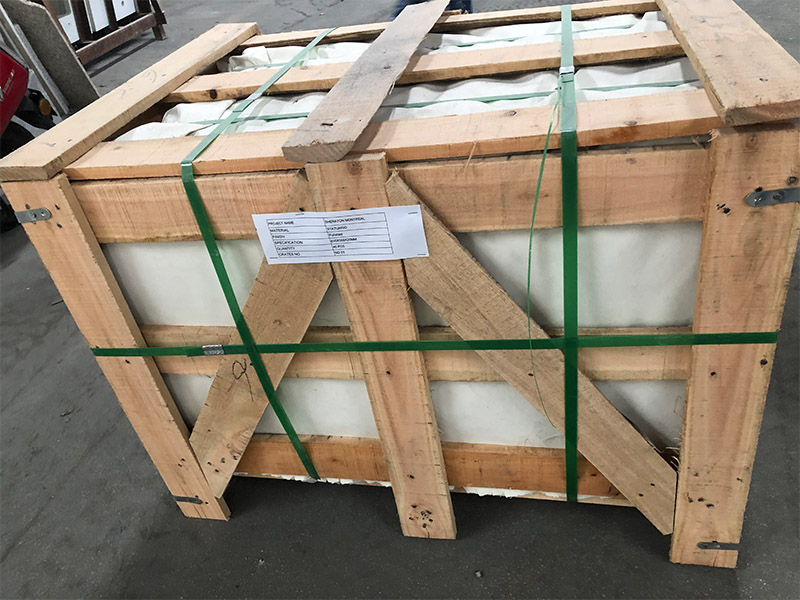
| صندوق خشبي | قطع حسب المقاس، بلاط، قطع مشاريع | قاعدة بسمك 18-25 مم، وجدران بسمك 12-18 مم، وبطانة من مادة البولي إيثيلين الموسع (EPE) بسمك 10-20 مم | ≤ 1.5 طن لكل صندوق |
| صندوق من الفوم داخل صندوق خشبي | بلاط رقيق | يتم وضعها في صندوق من الفوم أولاً، ثم يتم وضعها في صندوق خشبي كما هو موضح أعلاه | ≤ 1.5 طن لكل صندوق |
هذه هي التصاميم القياسية. توجد نسخ مُعززة للمواد عالية القيمة أو كبيرة الحجم - انظرما يمكنك تحديده في طلب الشراء الخاص بكأقل.
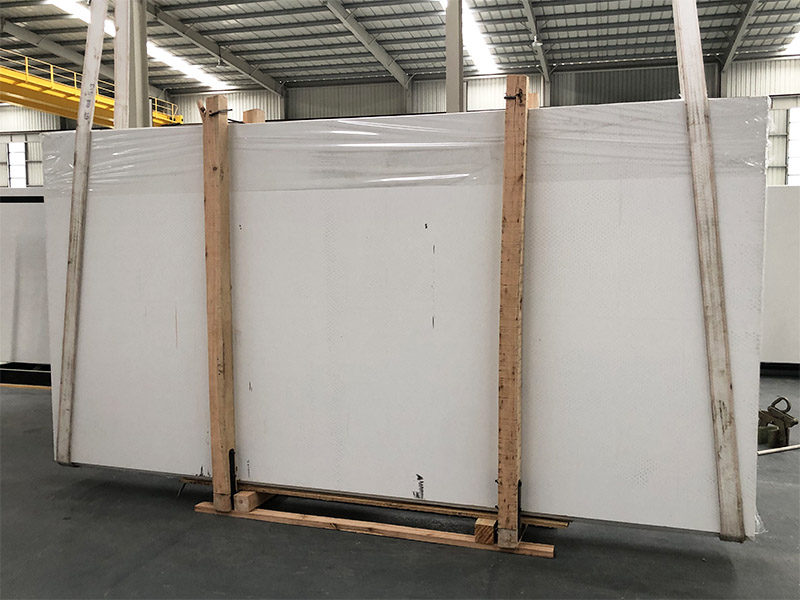
تُوضع كل حزمة من الألواح الكبيرة في إطارين خشبيين، يُدخل أحدهما من كل طرف. نقوم بقص الإطارات خصيصاً لكل حزمة، وليس من مخزون من المقاسات القياسية، لأن العرض الداخلي يجب أن يتطابق مع ما يُوضع فعلياً.
يبلغ مقاس خشب الهيكل 50×50 مم أو 60×60 مم، وهو من الصنوبر أو الخشب الصلب. أما في الأعمال الثقيلة - باستخدام مواد بسمك 3 سم وأحجام أكبر - فيصل مقاس الخشب إلى 70×70 مم. تتسع القاعدة إلى 80×80 مم لتوزيع الوزن بدلاً من الضغط على خطي التماس، وتُزود وصلات الأعمدة بالجسور بدعامات مثلثة. هذه الوصلة هي التي تتعرض للكسر أولاً. نترك مسافة لا تقل عن 100 مم أسفل الهيكل لضمان دخول شوكات الرافعة الشوكية بسلاسة وعدم ملامستها للحجر.
يتم تحديد العرض الداخلي للإطار بناءً على السماكة الإجمالية الفعلية للألواح الداخلة في تلك الحزمة،بالإضافة إلى 5-10 مم.
هذا التباعد فعال في كلا الاتجاهين. إذا تم بناء الإطار بإحكام شديد، فسيضغط على الحجر بمجرد تمدد الخشب أو ارتفاع درجة حرارة الحاوية. أما إذا تم بناؤه بشكل غير محكم، فستتحرك الحزمة بأكملها ذهابًا وإيابًا لمدة شهر في البحر. يتراوح هامش التباعد المسموح به بين 5 و10 ملليمترات.
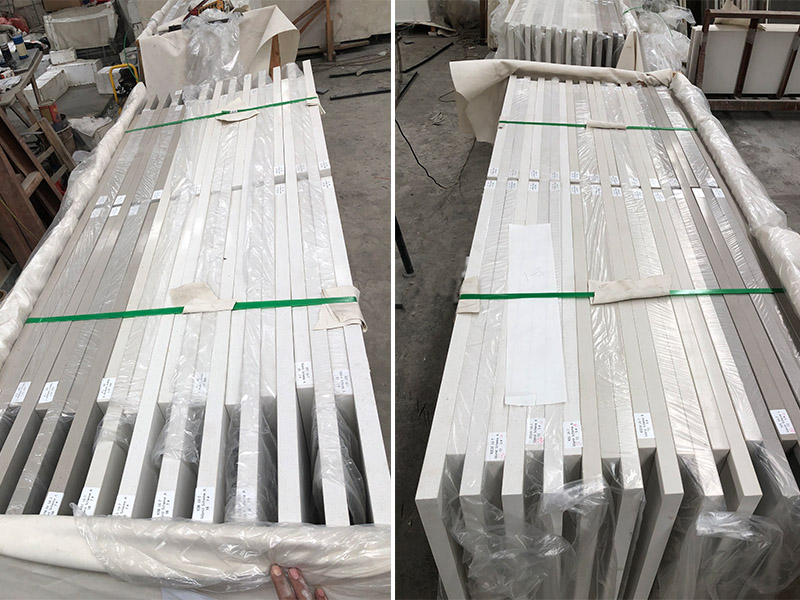
تُدخل الألواح عموديًا، وجهها المصقول مقابل وجهها المصقول، مع وضع رغوة بين الوجهين وحول الحواف. نرفع الحزمة، وندخل الإطارين من الطرفين، ونتأكد من وجود فجوة على كل جانب قبل تثبيت أي شيء. إذا لم تكن الإطارات والألواح متطابقة بإحكام، تتفكك الحزمة ويُعاد تجميعها. لا يُجدي شد الأربطة نفعًا في إصلاح عدم التطابق. ثم تُرفع الإطارات وتُثبت الحزمة من الأعلى إلى الأسفل.
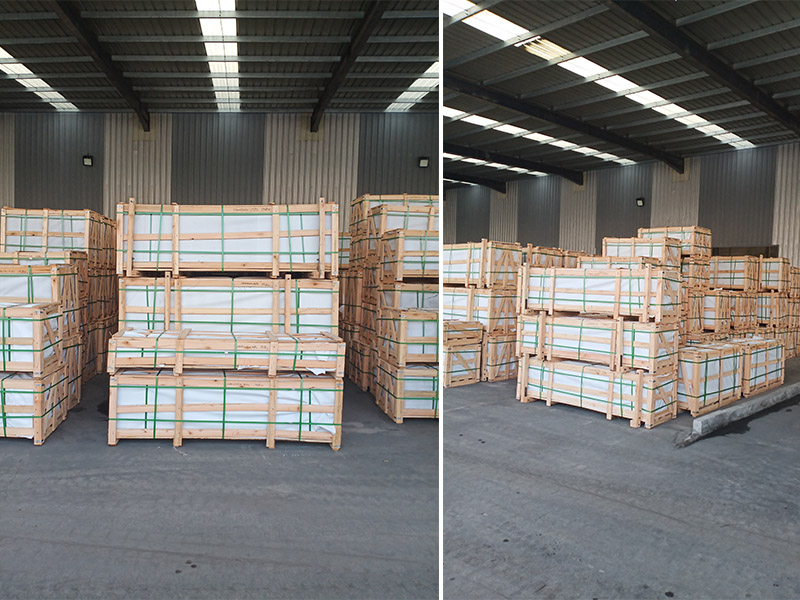
يتم تثبيت كل حزمة بأربعة أشرطة عرضية على الأقل من مادة PET بسماكة 16 مم، مع تثبيت نقاط التقاطع بسلك حديدي، وواقيات للحواف أسفل الشريط لمنعه من قطع الحافة. تتطلب الحزم الثقيلة حزامًا حديديًا بسماكة 20 مم عند كل طرف. الحد الأقصى لوزن الحزمة هو 2.5 طن، وهو حدٌّ تحدده قدرة النقل الآمنة في كلا طرفي الرحلة، وليس قدرة الإطار على التحمل.
يتم وضع ملصق على جانب كل حزمة قبل مغادرتها منطقة التعبئة: النوع، المواصفات، الكمية، رقم الحزمة.
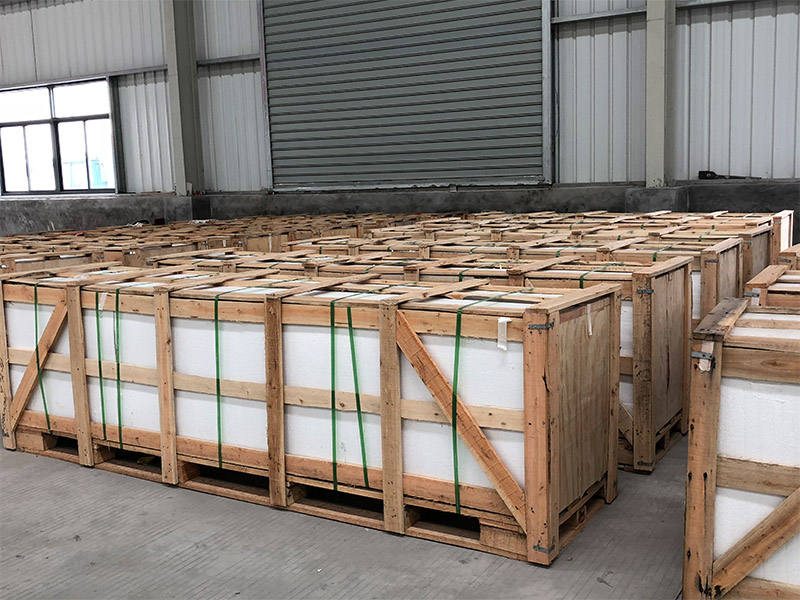
يتم وضع البلاط وقطع المشروع، بعد قصها حسب المقاس، في صناديق خشبية يصل وزنها إلى 1.5 طن.
تُصنع الصناديق من ألواح ومربعات قياسية. يبلغ سمك القاعدة من 18 إلى 25 مم، ويزداد إلى 20 مم أو أكثر عند تحميل الصندوق بأوزان ثقيلة. أما الجدران، فيتراوح سمكها بين 12 و18 مم؛ وأي صندوق يزيد ارتفاعه عن 1.5 متر، يصل سمكه إلى 18 مم مع تدعيم الجوانب. من الداخل، يُغطى كل سطح يلامس الحجر بطبقة من البولي إيثيلين الموسع (EPE) بسمك يتراوح بين 10 و20 مم، مع واقيات للحواف عند الارتفاعات.
We crate the same or closely similar specifications together. Pieces stack face to face and back to back, which halves the number of polished-against-unpolished contacts and cuts friction in transit. They go in tight against each other, no gaps and no looseness. Styrofoam lines the inside of the crate. Multi-layer packing takes a board and a foam layer between each layer, and where small pieces run in several rows, a board divides every row.
Two things happen before a crate is filled. It is set down stable, or tilted slightly backwards, so pieces lean back and cannot tip out during loading. And stone waiting to be packed never sits on the floor — rubber pads or timber strips go underneath it.
Crate width is set so it divides into the 20 ft container's internal width of roughly 2.35 m. Get that wrong and you spend the loading day filling voids.
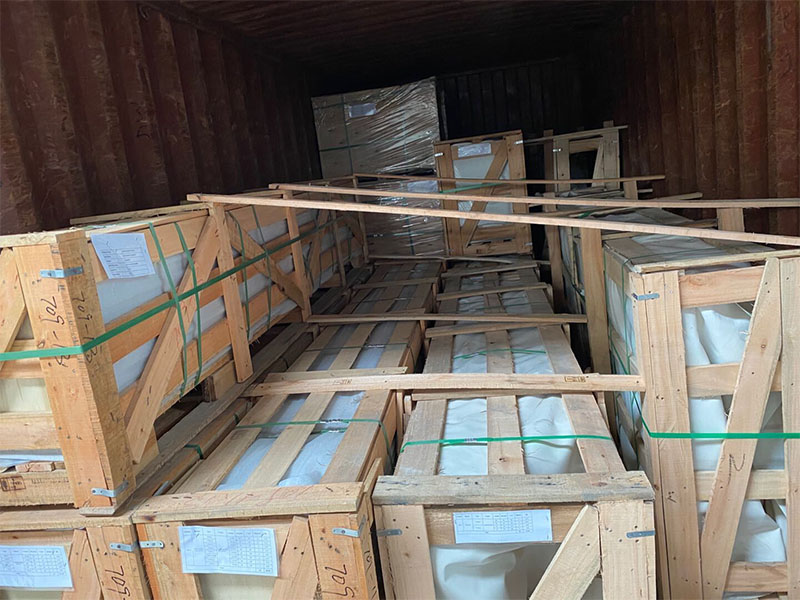
Before a crate closes, the variety, specification and quantity inside are counted against the packing list and written on a label fixed to the side.
All wood packaging leaving us is ISPM 15 compliant, fumigated with methyl bromide, and marked MB.
ISPM 15 is the IPPC standard for solid wood packaging in international trade. It recognises four treatments: heat treatment (HT, core temperature of 56 °C held for 30 minutes), methyl bromide fumigation (MB), dielectric heating (DH) and sulphuryl fluoride (SF). Ours is MB.
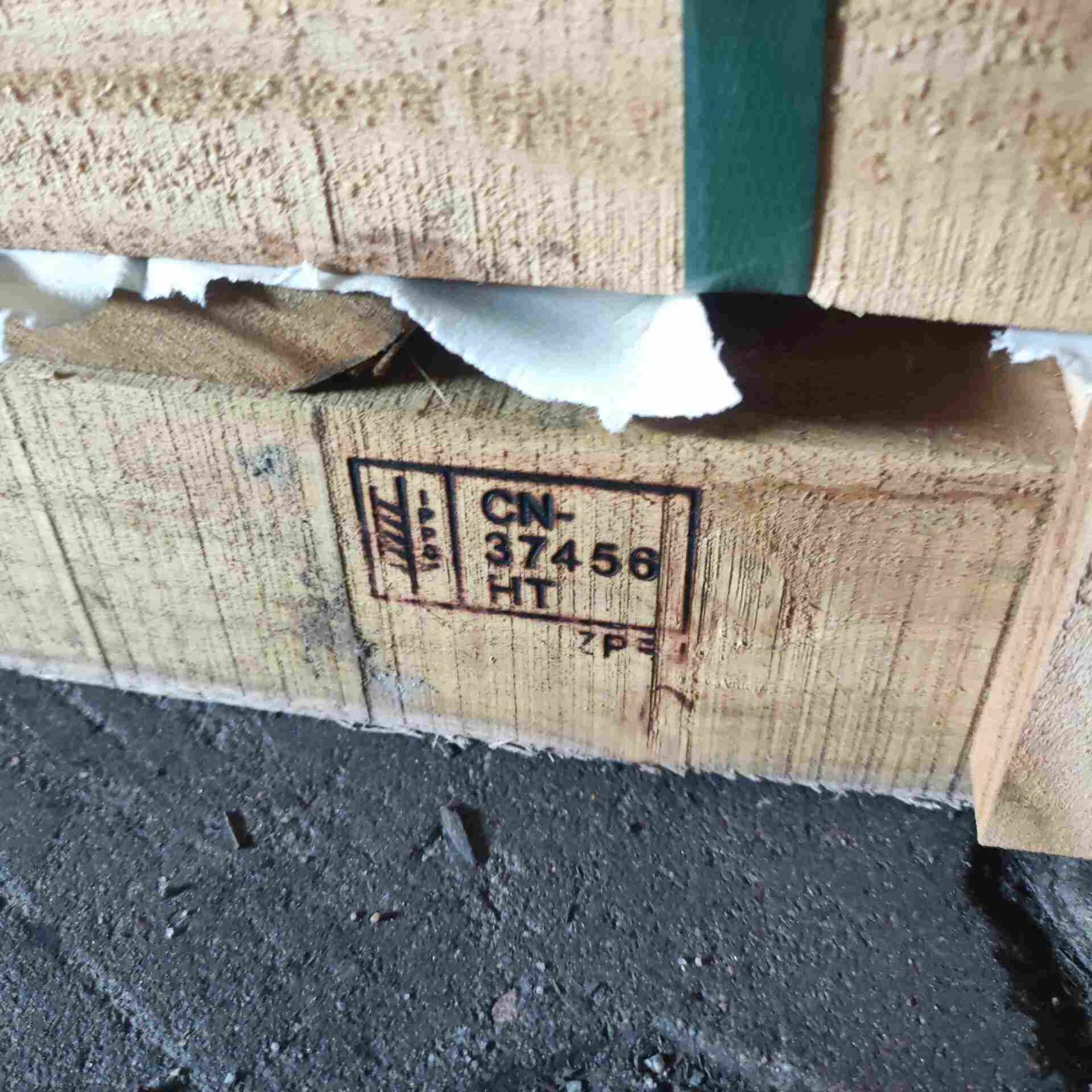
The mark itself is the compliance evidence, not a certificate sitting in a file somewhere. It carries the IPPC symbol, the two-letter ISO country code for where the wood was treated, the treatment provider's unique certification number, and the treatment abbreviation. That is what quarantine reads at the border. We can send you a photograph of it with the treatment documentation for your shipment.
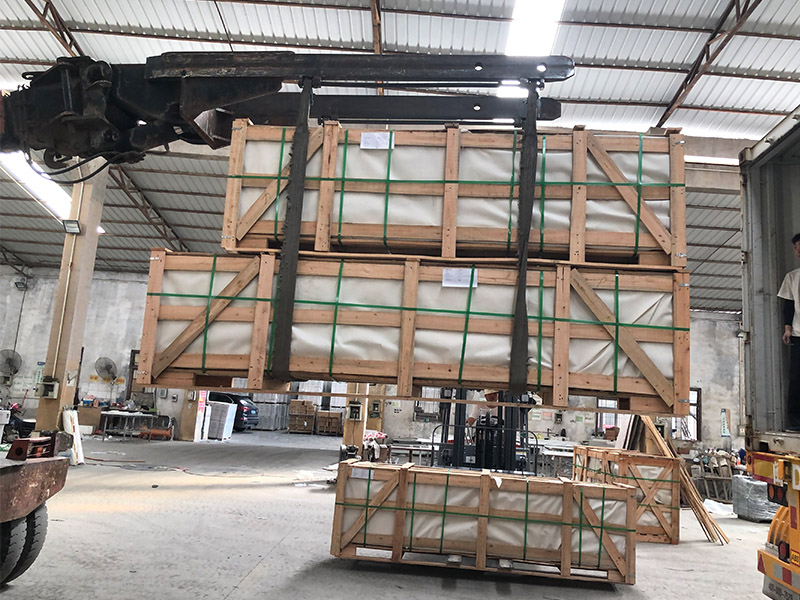
A container of marble hits its weight limit while it is still less than half full, so loading marble is a weight problem before it is a space problem.
Bundles go in along the centre line and spread down the length of the container, so the weight is not sitting over one axle position. That is what keeps the box legal on the road at the far end, not just safe at sea.
We stack staggered, not in straight columns, so vertical load is not running through a single line of frames. Anti-slip rubber strips go between bundles. Voids get braced and filled at loading — a void left alone closes up at sea, and the load shifts with it.
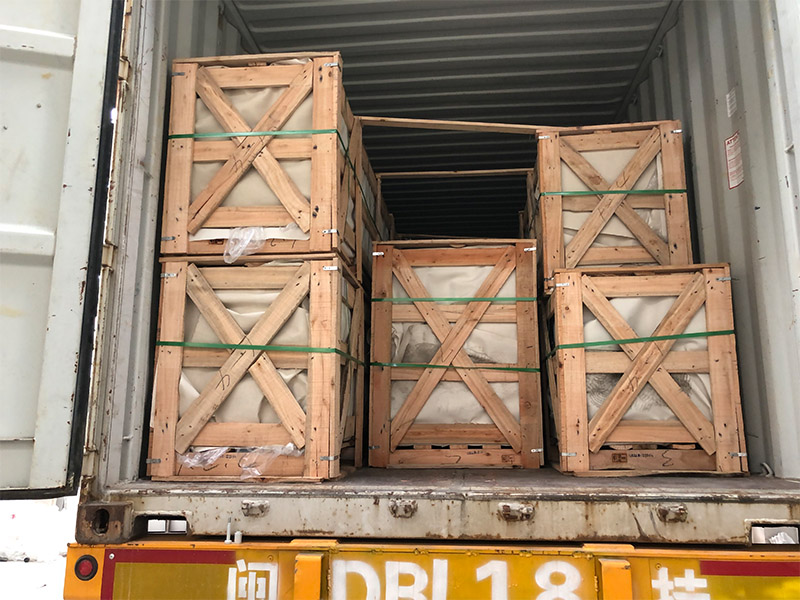
Crates carry a centre-of-gravity mark, lifting points and a moisture label, so whoever opens the container at the other end is not guessing. For securing and weight distribution we work to the IMO/ILO/UNECE CTU Code, which is the international reference for packing cargo transport units.
Short answer:a 20 ft container takes 8–12 bundles at 18–22 tonnes net, which is roughly 330–410 m² in 2 cm or 220–270 m² in 3 cm.
The longer answer matters more, because the figures published for this vary so widely that they are hard to use. Four things move the number: slab format, thickness, the weight of the packing itself, and the road weight limit at the destination. Here is how to work it out for your own order.
Marble runs at roughly 2.7 tonnes per cubic metre. That gives:
At the two common big-slab formats:
| Slab format | Area | Weight at 2 cm | Weight at 3 cm |
|---|---|---|---|
| 2400 × 1200 mm | 2.88 m² | approx. 156 kg | approx. 233 kg |
| 3000 × 1500 mm | 4.50 m² | approx. 243 kg | approx. 365 kg |
1. The container.A 20 ft box is rated at about 30,480 kg gross. Tare runs 2,200–2,400 kg, so structural payload lands around 28,000 kg.
2. The road limit at the destination.This is almost always the real constraint, and it is why published container figures differ so much. In the United States the federal Interstate limit is 80,000 lb gross vehicle weight, with 20,000 lb on a single axle and 34,000 lb on a tandem. Take out tractor, chassis and container tare, and the cargo weight buyers work to sits well under the container's structural payload. European and Australian limits bite the same way at different numbers.
3. The packing.Timber frames and crates are part of the gross weight. They are not free carriage.
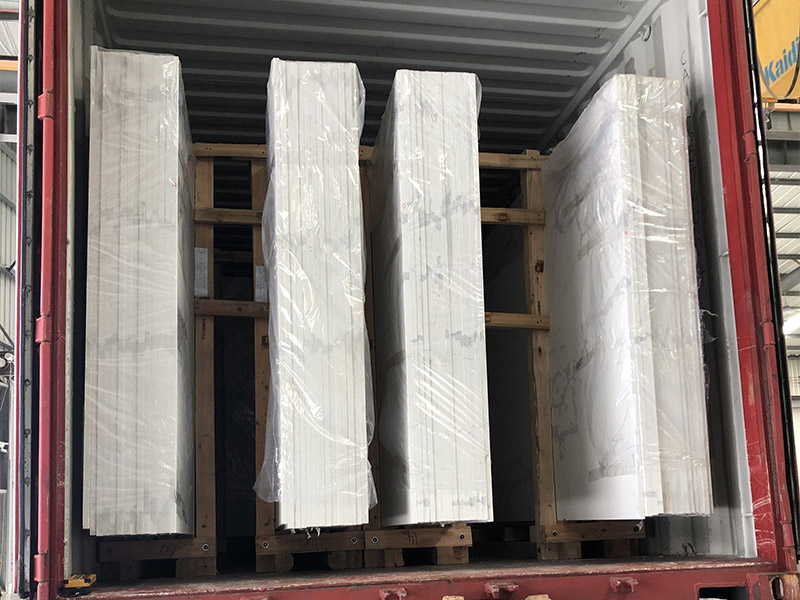
A 20 ft container of marble big slabs normally takes8–12 bundles at 18–22 tonnes net. Against the figures above, that is roughly330–410 m² in 2 cm, or220–270 m² in 3 cm. Exact quantity depends on the format and thickness you order; formats vary between different marble materials, and so does the number of slabs a bundle will take.
Tell us the road weight limit you work to at your destination and we load to it. That is a much cheaper conversation before the container is booked than after it is turned away at the port.
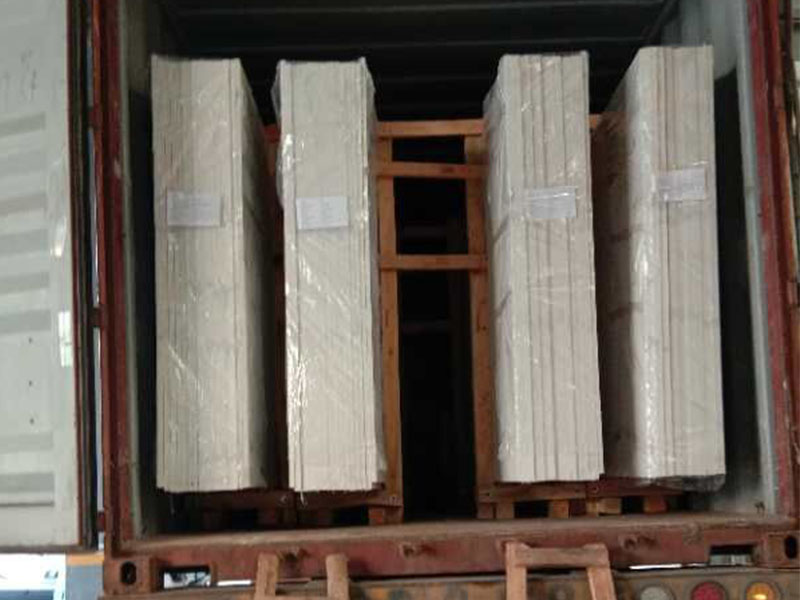
At 2.7 t/m³ a 40 ft container reaches its weight limit long before it is full, so you pay freight on space you cannot fill. Marble moves in 20 ft boxes for the same reason blocks do. A 40 ft only makes sense on lighter or lower-density material.
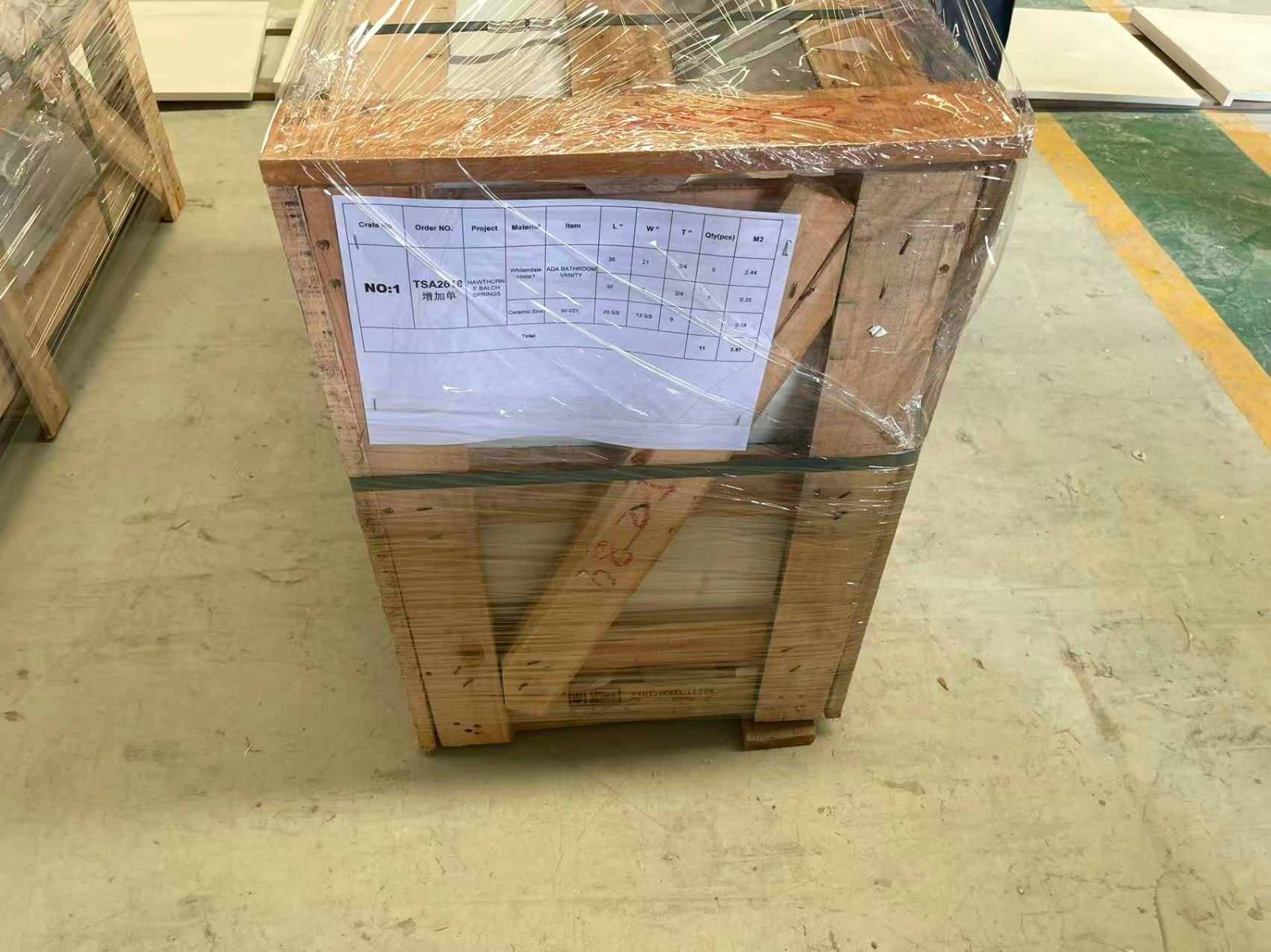
Nothing is packed until it has passed final inspection, and nothing is sealed until QC has signed for it.
Pieces are counted against the packing list, cleaned, and visually checked. Anything that fails goes back to QC and the workshop to be remade. The packer records what went into each crate and bundle, and a QC inspector confirms and signs before the crate closes. That is part ofour serviceon every order.
What it leaves you holding:
If a claim ever has to be made, this is the paperwork that settles it quickly, and it costs nothing to have it on file.
Everything above is our standard build. It can be adjusted, and order stage is when to say so — not once the container is booked.
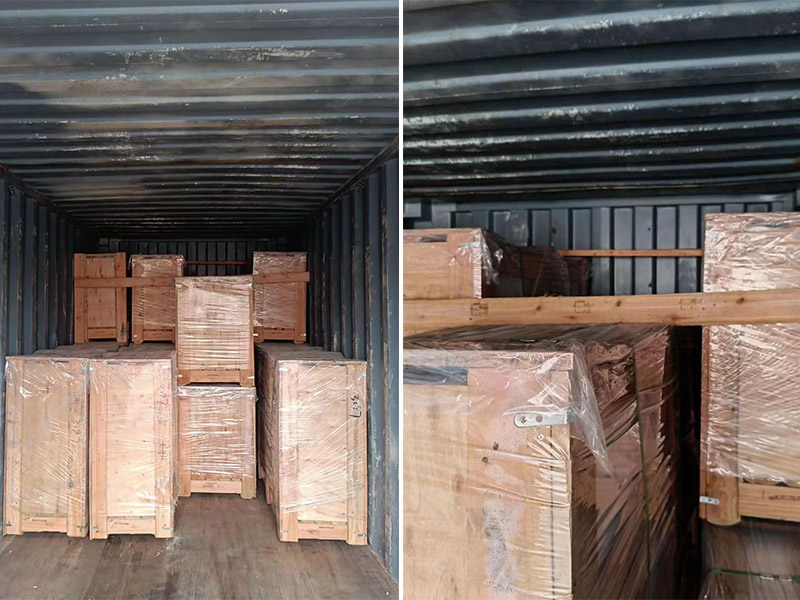
Specify none of it and you get the standard build above, which is set up for a normal 20 ft ocean shipment.
Is your wood packaging ISPM 15 compliant?
Yes. All crates and frames are ISPM 15 compliant and fumigated with methyl bromide. Each one carries the IPPC mark showing the country code, the certification number and the MB treatment code.
How many marble slabs fit in a 20 ft container?
A 20 ft container of big slabs normally takes 8–12 bundles at 18–22 tonnes net, which works out at roughly 330–410 m² in 2 cm or 220–270 m² in 3 cm. The limit is weight, not space.
Can you load to our destination's weight limit?
Yes. Tell us the limit you work to and we load the container to that figure instead of to its structural capacity.
Do you heat treat or fumigate the timber?
We fumigate with methyl bromide. The IPPC mark on the timber carries the MB code. ISPM 15 also recognises heat treatment, dielectric heating and sulphuryl fluoride, and any of the four is valid for import.
Why does marble ship in 20 ft containers rather than 40 ft?
Marble weighs about 2.7 tonnes per cubic metre. A 40 ft container reaches its weight limit well before it is full, so the extra space cannot be used and you pay freight on it anyway.
What should we do if slabs arrive damaged?
صوّر العبوة قبل فتحها، ثم صوّر التلف في موضعها داخل الصندوق أو الحزمة. أرسل هذه الصور مع صور التحميل وقائمة التعبئة الخاصة بالشحنة. إن مطابقة حالة الوصول مع حالة التحميل هي ما يُسهّل تسوية المطالبة، ولذلك يُنصح بالاحتفاظ بسجل التحميل حتى في حال عدم وجود أي مشكلة.
هل يمكننا تحديد نوع التعبئة والتغليف الخاص بنا؟
نعم، يمكننا تصميم التغليف حسب طلبكم. أخبرونا بذلك عند تقديم الطلب، وسنؤكد المواصفات قبل بدء الإنتاج.
أرسل لنا المادة، والتنسيق، والوجهة.
سنعود إليكم بمواصفات التعبئة وكمية الحاوية لطلبكم، حتى تعرفوا الوزن الإجمالي قبل حجز الصندوق.اتصل بنا.
 ROOM 205,NO.45, MIDDLE HAIJING ROAD,XIAMEN,AREA OF PILOT FREE TRADE ZONE(FUJIAN)OF CHINA
for استفسارات حول منتجاتنا أو الأسعار بينها، يرجى ترك لنا وسنكون على اتصال في غضون 24 ساعات.



© حقوق النشر: 2026 XIAMEN EXCELLENT STONE CO.,LTD. كل الحقوق محفوظة.

دعم شبكة IPv6